
Process miningQPR ProcessAnalyzer:
see the process as it really runs
Novacon and QPR SoftwareQPR partner since 2023
Implementation partner for QPR ProcessAnalyzer. We take you from the first analysis to continuous monitoring, and on to automation.
What it isProcess mining and process intelligence
QPR ProcessAnalyzer reads the event data that SAP and other systems record for every transaction, and rebuilds from it how a process really runs: every path, every delay, every deviation.
On top of process mining it adds process intelligence: the findings are connected with business rules, target models and KPIs. Root cause analysis explains why a process deviates, conformance checking finds every deviation from the approved design, and alerts keep watch after the fix. Through its MCP interface, AI assistants can ask about the same facts in natural language.
The next step is usually action. We combine ProcessAnalyzer with lean methods, and with Automate Studio and Automate Evolve when the steps worth automating are in SAP.
Product facts
- Vendor: QPR Software
- Type: Process mining and process intelligence platform
- Connectors: SAP, including SAP S/4HANA; Oracle, Salesforce, ServiceNow, Microsoft Dynamics
- Other sources: Epicor, Infor M3, IFS, Workday, and data platforms through standard APIs, ODBC and database connections
- Deployment: Snowflake Native App, powered by Snowflake, cloud, hybrid or on-premises
- AI: MCP interface for supported versions of ChatGPT, Claude and Microsoft Copilot
- Modeling: Built-in BPMN 2.0 editor; integrates with QPR EnterpriseArchitect
- Object-centric: Object-centric process mining (OCPM), OCEL 2.0 standard
- Security: ISO 27001 and ISO 9001 certified vendor; TISAX assessment completed
- Try it: 30-day free trial, also as a Snowflake Native App
The problem it solvesProcesses you see only in fragments
- Delays and rework build up between systems and teams, but the root cause stays hidden.
- Skipped approvals and off-process steps surface only in an audit.
- Audits rely on samples and assumptions instead of the full data.
- Automation is chosen by gut feeling, not by volume and rework.
- AI assistants see the data, but not how the work actually flows.
- The same problems return, because nothing is monitored after the fix.
Our solutionProcess Mining
Found the steps worth automating? Automate them in SAP with Automate Studio or Automate Evolve.
What it is forThree ways to use process mining
Increase automationBusiness transformation
- Compare the actual process with the design
- Find the steps worth automating
- Monitor the transformation as it happens
Increase efficiencyOperational excellence
- Find waste and inefficiency in the process
- Identify root causes and fix them
- Monitor process KPIs
Cover the whole processRisk and compliance
- Find deviations, violations and fraud
- Get notified about breaches immediately
- Keep regulatory compliance continuous
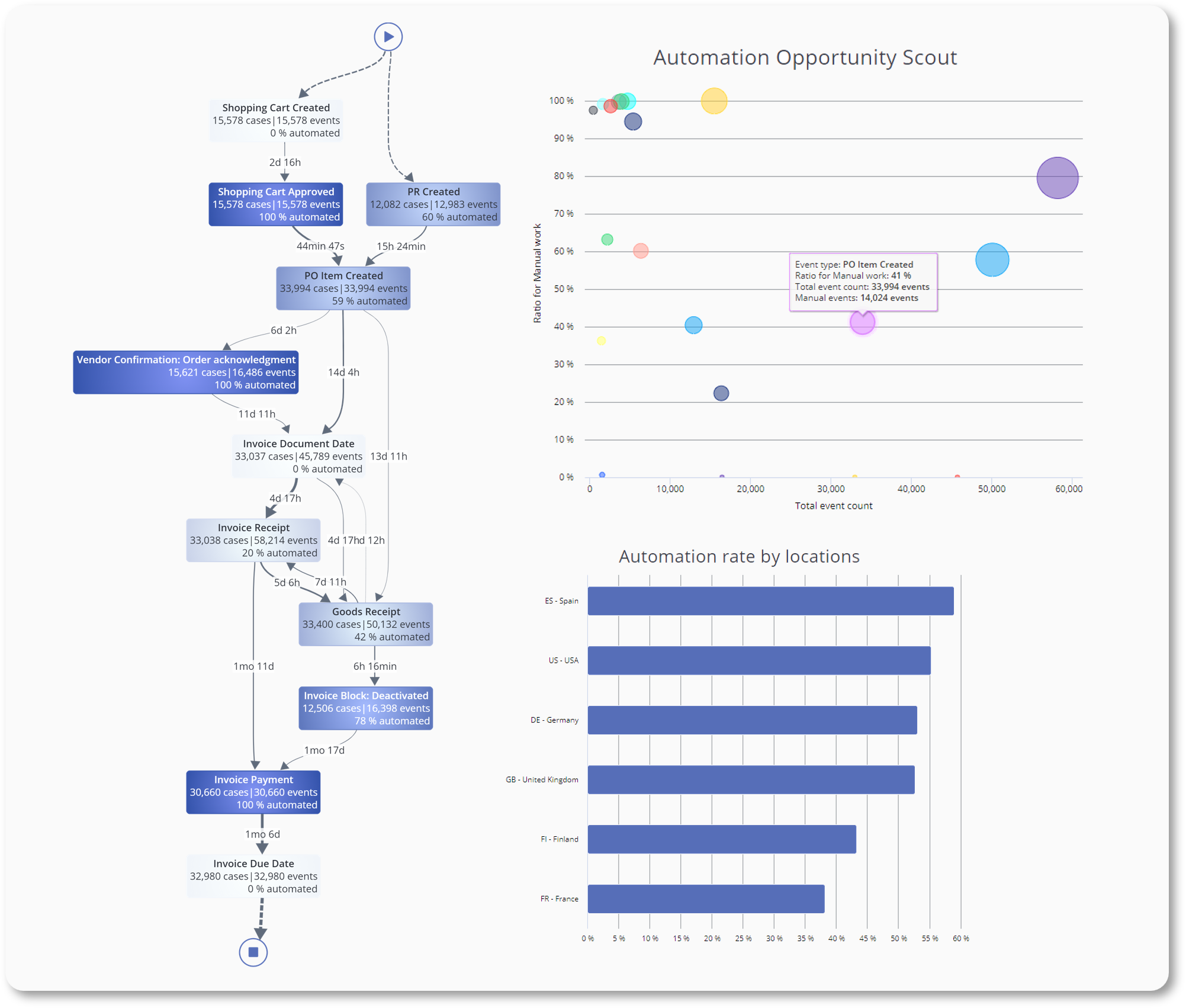
QPR ProcessAnalyzer: a purchase-to-pay process flow rebuilt from system data (left), the Automation Opportunity Scout and automation rates by location (right). Source: QPR Software.Click the image to enlarge it.
Key featuresEight capabilities from discovery to AI
DiscoverInteractive process visualisation
The real process, step by step.
- Process flows rebuilt from system data
- Variants, throughput times and volumes
- Drag-and-drop dashboards
ExplainOne-click root cause analysis
From what happens to why.
- Machine learning ranks the causes behind a KPI or SLA breach
- Attributes, steps and variations compared
- Ready-made analyses: Pareto, boxplot, control chart
ComplyConformance checking
Every deviation, not a sample.
- Actual execution compared with BPMN target models
- Unauthorised steps and skipped approvals detected
- Continuous auditing of process health
AutomateAutomation opportunity discovery
Automate where it pays off.
- Process mining combined with task mining data
- Ranked by volume, rework and potential ROI
- Before a single line of code is written
ConnectObject-centric process mining
Orders, items and shipments together.
- OCEL 2.0 standard
- Dependencies between connected business objects
- End-to-end view across departments
ModelIntegrated mining and modeling
Design and reality side by side.
- Built-in BPMN 2.0 editor
- As-is process exported to BPMN
- Integration with QPR EnterpriseArchitect
MonitorSmart alerts
Act before the issue escalates.
- Proactive: custom rules alert you when a negative trend starts, before a KPI crosses its threshold
- Real-time: email, Slack or webhook notification as soon as a rule is broken
- Retroactive: with periodic data loads, alerts follow after the next refresh
AIMCP interface for AI agents
Process facts for AI assistants.
- Model Context Protocol server endpoint
- Questions in natural language
- Answers grounded in your process data
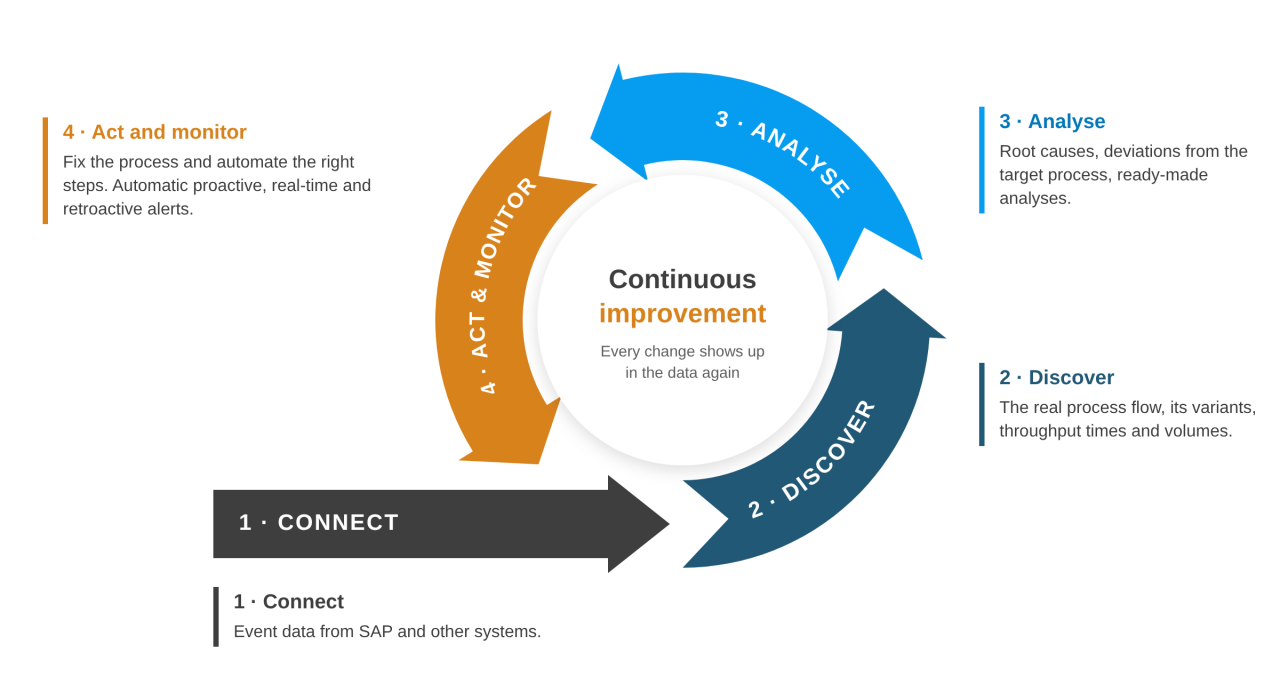
How it worksFour steps, from system data to action
1 · Connect
Pre-built connectors bring event data from SAP and your other systems; a built-in ETL engine handles custom sources.
2 · Discover
ProcessAnalyzer rebuilds the process flow and its variants, with throughput times and volumes.
3 · Analyse
Root cause analysis, conformance checking and ready-made analyses show why the process deviates.
4 · Act and monitor
Fix the process and automate the right steps. Automatic proactive, real-time and retroactive alerts.
Typical processesWhere process mining pays off first
Source to pay
Purchase requests, orders, goods receipts and invoices: where approvals stall and invoices get blocked.
Order to cash and finance
From order to payment: delivery delays, credit blocks and manual rework in finance.
Customer service
Tickets and requests: where they wait, bounce between teams or breach the SLA.
Internal audit and compliance
Full-population checks instead of samples: every deviation from the approved process.
These are the most common process areas, not the limits of the product: ProcessAnalyzer can analyse any process that leaves event data in your systems.
How we can helpWhere Novacon comes in
As QPR implementation partner, we connect the data, build the analyses and help your teams act on them. Licences are provided by QPR Software; see QPR Software for the partnership.
Consulting & Assessment
A process mining assessment: we choose the process, connect the data and present the first findings.
Solution Design & Implementation
Connectors, data model, analyses and alerts set up for your processes and your teams.
Application Management & Support
We keep the data flowing, add new analyses and help your team act on the findings.
Frequently asked questionsQuestions we hear most often
What is the difference between process mining and process intelligence?
Process mining uses system data to show how a process actually runs. Process intelligence connects these insights with business rules, targets and KPIs, so people and AI can decide better. QPR ProcessAnalyzer does both, from discovery and root cause analysis to continuous monitoring and AI access.
Does QPR ProcessAnalyzer work with SAP?
Yes. QPR provides out-of-the-box connectors for SAP, including SAP S/4HANA. Once the process is visible, we can automate the right steps in SAP with Automate Studio or Automate Evolve.
Which other systems can it connect to?
Pre-built connectors exist for Oracle, Salesforce, ServiceNow and Microsoft Dynamics, and integration is supported for Epicor, Infor M3, IFS and Workday. Other systems and data platforms connect through standard APIs, ODBC and database connections.
Do we need Snowflake?
No. Snowflake is one deployment option: QPR ProcessAnalyzer is available as a Snowflake Native App, where the data stays in your own Snowflake account. It also runs in cloud, hybrid and on-premises environments.
What is object-centric process mining?
It analyses connected business objects, such as orders, items and shipments, together instead of one case at a time. QPR ProcessAnalyzer supports it with the OCEL 2.0 standard, which reveals dependencies and bottlenecks across end-to-end processes.
Can QPR ProcessAnalyzer warn us before a problem occurs?
Yes. With custom rules on your alert points, ProcessAnalyzer can send a proactive alert when a negative trend starts, before a KPI crosses its threshold. Real-time alerts arrive by email, Slack or webhook as soon as a rule is broken. When the data is loaded periodically rather than continuously, alerts are retroactive: they follow after the next data refresh.
How fast can we see results?
According to QPR, the time to first insights depends on data readiness, system connectivity and process complexity. We usually start with one process and one data source, so the first findings come early.
Pick one process. We will show you how it really runs.
ContactTalk to an expert
Tell us which SAP process or product you are looking at. One of our consultants will get back to you.
- We read your message and pass it to the consultant who knows the topic.
- We contact you to agree on a short call.
- If you wish, we show a demo on a process like yours.
Prefer to write directly?
info@novacon.hu
NOVACON ZRT.Headquarters
Hungary
INTERNATIONAL FOOTPRINTProjects in Europe

NOVACON ZRT.Headquarters
Hungary
INTERNATIONAL FOOTPRINTProjects in Europe
KNOWLEDGE SHARINGNovacon community
Copyright 2026 Novacon Zrt. All rights reserved!
Copyright 2026 Novacon Zrt. All rights reserved!